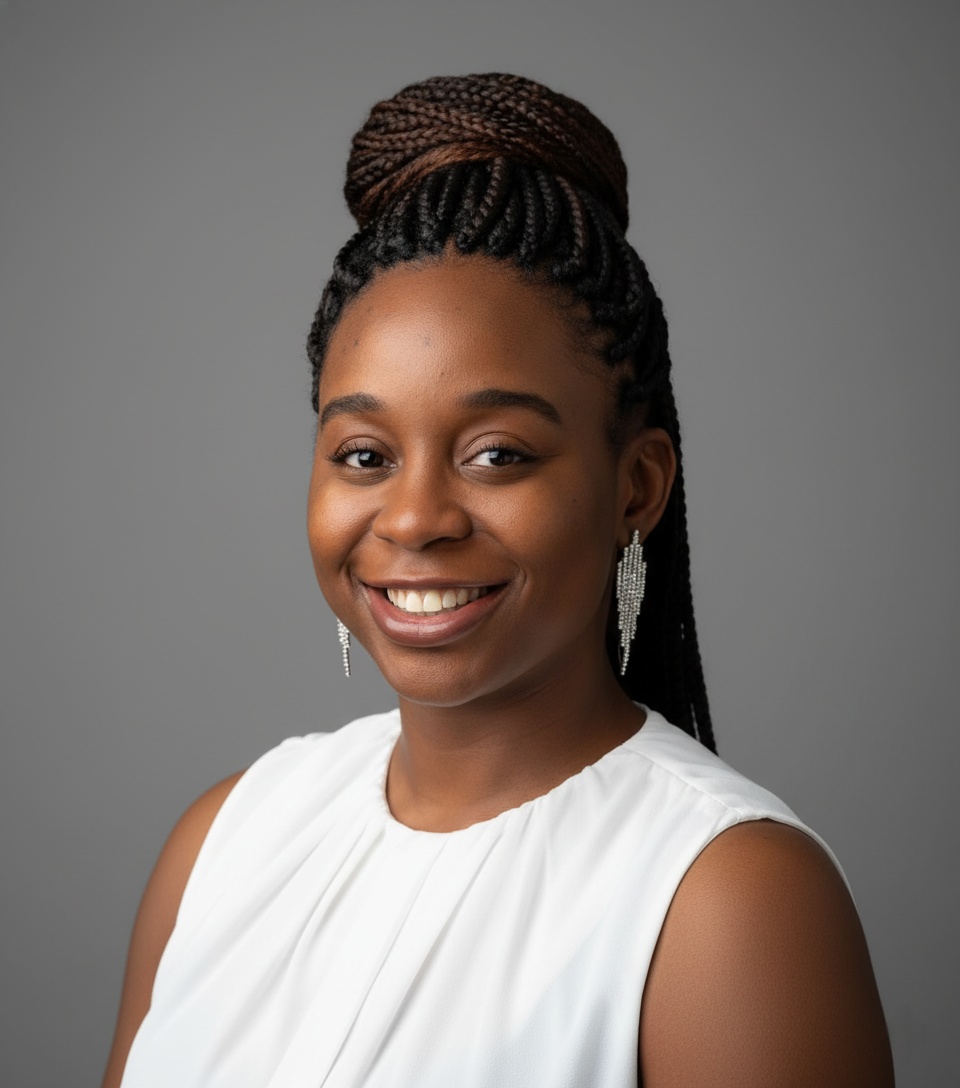

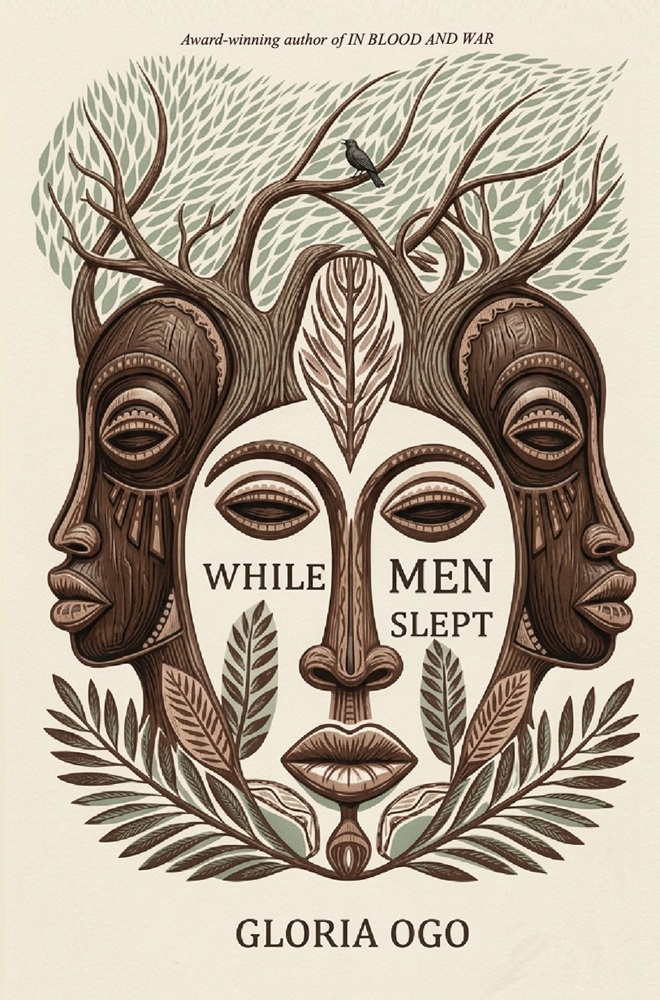
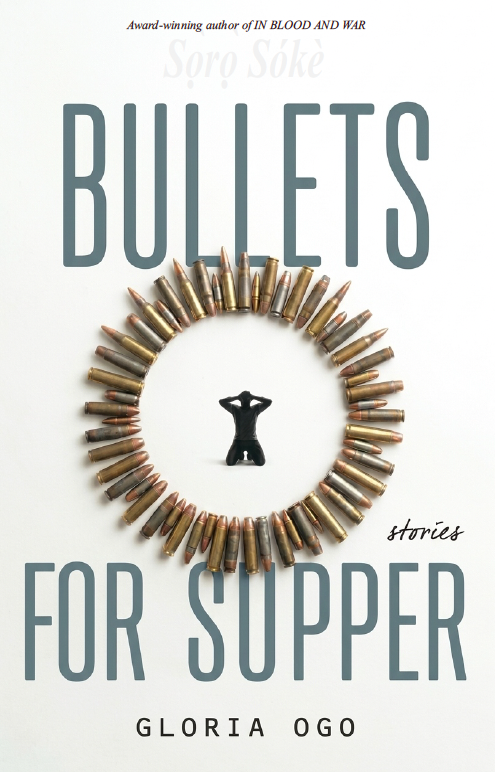
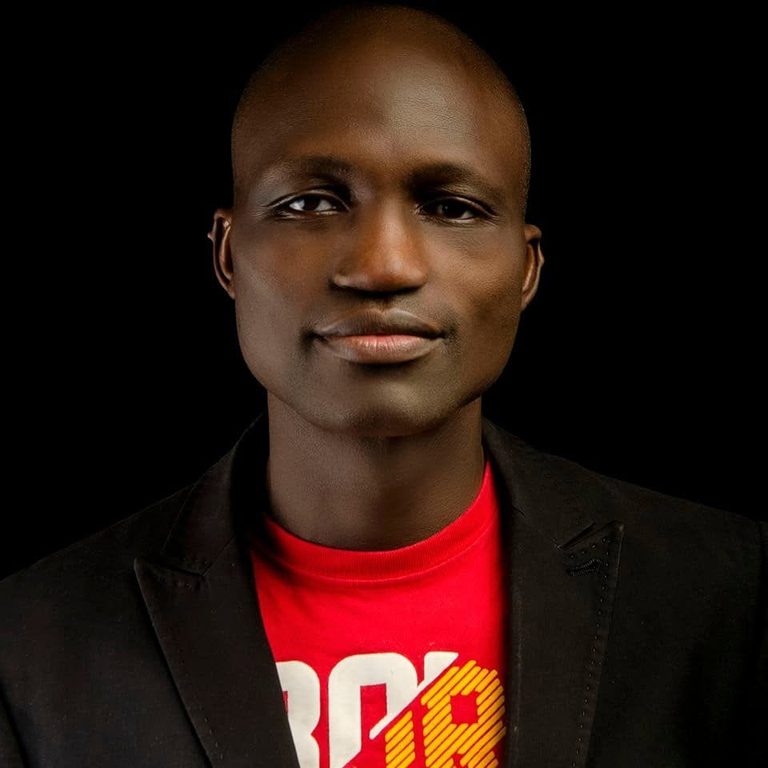
Gloria Ogo is a writer with several published novels and poetry collections. Her work has appeared in Eye to the Telescope, Brittle Paper, Spillwords Press, Metastellar, Gypsophila Magazine, Harpy Hybrid Review, Allegro Poetry Magazine, among others. Gloria holds a Master of Fine Arts in Creative Writing and served as a reader for Barely South Review. She is the winner of the Brigitte Poirson Literature Prize (2024) and a finalist for the Jerri Dickseski Fiction Prize (2024), the ODU Poetry Prize (2025), and the Rhonda Gail Williford Poetry Prize (2025). She is also a finalist for the Lucky Jefferson Poetry Contest (2025) and The Drive Award (2026). Her work was longlisted for the American Short(er) Fiction Prize (2025) and shortlisted for the Wergle Flomp Humour Poetry Contest (2026). In this 7 Crossings interview, she reflects on her Nigerian roots, the artistic influences guiding her craft, and her evolving perspective since relocating to the United States."
- The Origin: What is one sound, scent, or image from your earliest home that still finds its way into your work today?
Gloria Ogo: It is the sound of my father clearing his throat. I have used it in my writing, but until this question, I had never stopped to think about where it came from. I find that interesting because, as writers, we spend so much time thinking about how to make our characters believable, how to give them little habits and gestures that make them feel like real people. We observe, we borrow, we imagine. But sometimes, we forget that some of what we put on the page has been living inside us for years.
I must have heard my father clear his throat so many times that the sound became part of me without my noticing. When I needed that detail in a story, I reached for it naturally. I didn’t have to invent it or search for an example. It was already there. And now that I think about it, I wonder how many other things I have carried into my writing from the people I have loved, the things I grew up watching, the sounds and gestures I never thought I would remember.
I think this is one of the beautiful things about the craft of writing. You can sit down intending to create something entirely from your imagination and end up discovering something about yourself instead. You begin by trying to make a character feel real, and somewhere along the way, you realise that you have been drawing from a life you thought you were simply living.
My father has found his way into my work without my consciously putting him there. I find that moving. Perhaps the craft is not always about inventing something new, but about paying attention to what life has already given us, even when we don’t yet know what to call it.
- The Crossing: How has moving, whether across oceans, cities, or internal states of mind, changed the way you create?
Gloria Ogo: Moving to the United States has changed the kind of stories I want to tell. For a long time, much of what I wrote came from the things that hurt, the things I had witnessed, and the things I was still trying to understand about Nigeria. Suffering, oppression, and lost dreams found their way into my work, sometimes because I wanted to write about them and sometimes because I didn’t know how to write around them. In many ways, those experiences shaped me as a writer, but they also left me wondering whether pain was all I knew how to write about.
Distance has given me room to ask myself different questions. I find myself wanting to write lighter stories now, stories that allow people to be happy, foolish, in love, hopeful, and ordinary without having to suffer terribly before they can deserve a place on the page. I want to explore the parts of life that hardship sometimes pushes into the background, the laughter, the tenderness, the strange little joys that make living worthwhile.
I don’t think I have stopped being interested in difficult stories. I am still a writer who bears witness, and I cannot pretend that the things I have seen do not matter. But I am learning that witnessing does not have to mean returning endlessly to pain. I want the freedom to write beyond my wounds, to imagine worlds where my characters are allowed to live, not merely survive. Perhaps that, too, is a kind of healing.
- The Ritual: What does your creative sanctuary look like, and what is the one non-negotiable habit you need before you start working?
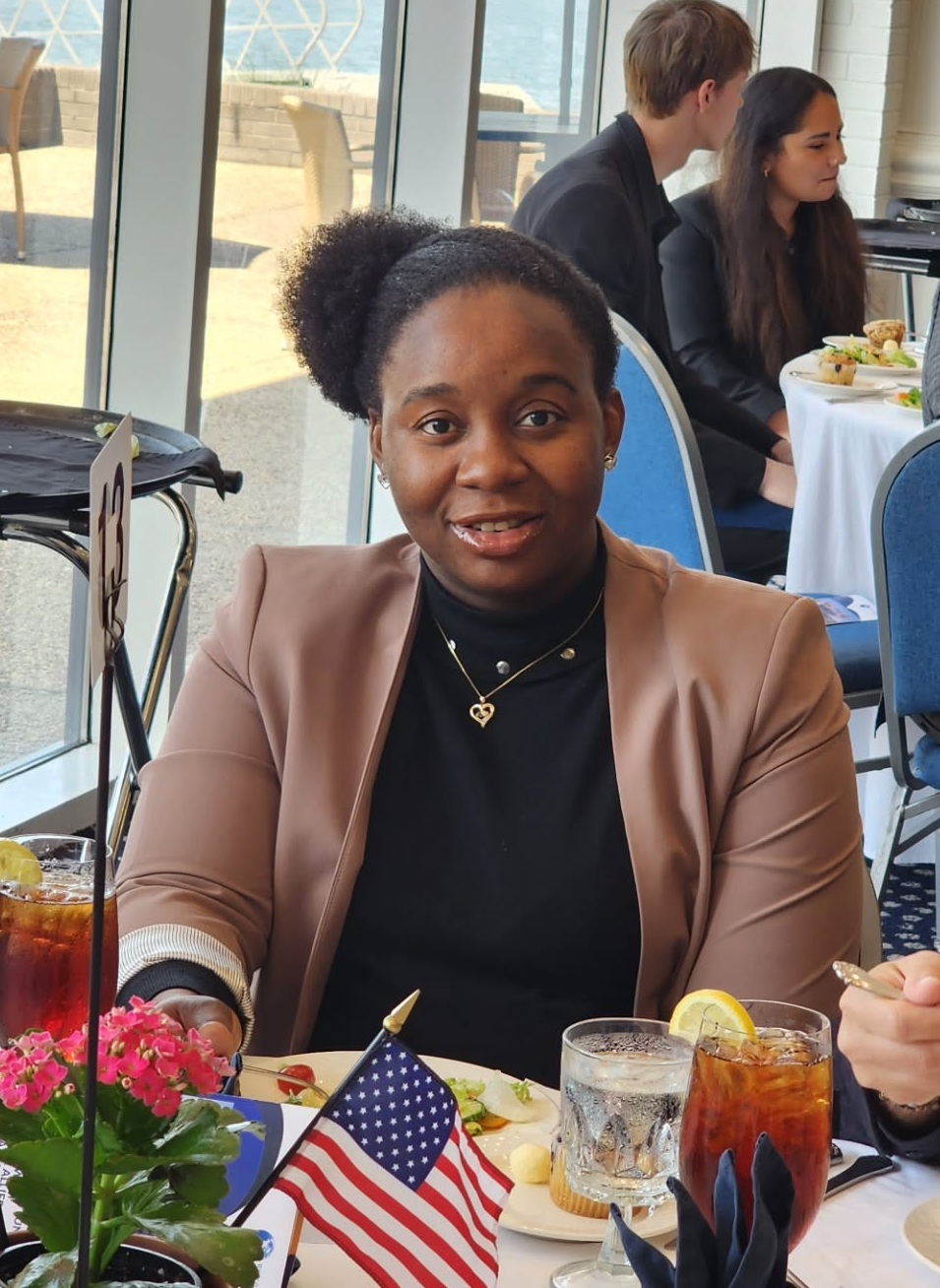
Gloria Ogo: My creative sanctuary can be anywhere, really, as long as it is quiet enough and soothing enough for me to disappear into my own head. I don’t need a particular room or a beautifully arranged desk to write. Sometimes, all I need is a little distance from the noise around me and the freedom to sit with my thoughts. Writing, for me, often begins long before I put anything on paper. It begins in that place where I allow my mind to wander, where a memory leads to a question, a question becomes an image, and an image slowly begins to look like a story.
I have learned not to rush that process. My one non-negotiable habit is giving myself a few minutes to gather my thoughts before I begin. It might not look like much to someone watching me. I might simply be sitting there, staring into space, doing what appears to be nothing. But in those moments, I am listening to myself, trying to figure out what has brought me to the page and what I want to do with it.
Sometimes the story comes easily; other times, I sit there for a while before anything makes sense. I have learned to accept both. I think writing requires a certain willingness to be still, to let your mind wander without demanding that it produce something immediately. That little pause helps me find my way into the story.
- The Friction: What is the hardest truth you have had to confront about making art in a space where you might feel like an outsider?
Gloria Ogo: I think it was when a friend took one of my stories to another friend of his and asked how realistic what I had written could be. The story was about religious conflict in Nigeria, something I did not have to invent from nothing. It came from a world I knew, from realities I had lived with and witnessed. And yet, someone needed to know whether it was believable.
I remember what that made me realise. As writers, we are often told to make our stories convincing, to give readers enough detail to believe in the worlds we create. But what happens when the truth itself sounds too strange for people to believe? What happens when something you have witnessed is questioned simply because someone else’s experience of the world has not prepared them for it?
That experience taught me that my stories would not be for everyone, and that I did not always have to explain myself. There is a difference between writing to help someone understand and feeling that you must defend the truth of your own experience. I am willing to do the former, but I no longer feel obligated to do the latter.
Some realities are stranger than fiction, and sometimes fiction is the only way we can begin to tell them.
I have learned that I do not have to make my lived truth smaller, softer, or more believable to earn the right to write about it. I know what I have seen. That has to be enough.
- The Lineage: Which ancestor, mentor, or fellow artist, do you feel is standing over your shoulder when your work is at its best?
Gloria Ogo: At its best, I would say Chinua Achebe. He was one of the first writers who made me understand that our stories were worth telling, that the worlds we came from, the people who raised us, our traditions, our contradictions, and even the things we struggle to understand about ourselves could become literature. In some ways, he opened a door for me before I even knew I wanted to walk through it.
I think about him when I write, especially when I am trying to decide whether a story is working, whether I have done justice to the people and experiences I am writing about. I sometimes imagine him looking over my shoulder, asking the difficult questions. Have I paid attention? Have I told the story honestly? Have I understood the people I have placed on the page, or have I simply used them to make a point?
Achebe began the path for me, so I suppose he gets to decide whether I am writing up to standard. Of course, I know he is not literally sitting there judging my work, but that imagined presence keeps me accountable. It reminds me that writing is not just about having a story to tell; it is also about the responsibility of telling it well.
- The Compass: When self-doubt or exhaustion sets in, what anchors you and reminds you why your voice matters?
Gloria Ogo: What brings me back to the page is the reminder that writing is not always just about us. I believe writers are vessels, and sometimes we are entrusted with stories that are bigger than our individual experiences. There are people whose suffering goes unnoticed, whose voices are dismissed, whose stories are told by everyone except themselves. I think about them often, and I remind myself that having the ability to write about these things comes with a responsibility I must not take lightly.
Of course, there are days when I am tired, when I question my work, or when I wonder whether any of it matters. But then I remember that silence has consequences, too. I remember how easily people become statistics, how quickly the world moves on from someone else’s tragedy, and how much can be lost when nobody is willing to bear witness.
For me, writing is a duty, but it is also a calling. I don’t mean that every story I write must be about oppression or that I must carry the world’s suffering on my shoulders. I am learning that I can write about joy, love, and ordinary life, too. But whatever I choose to write, I want to do it with honesty and an awareness of the lives behind the words.
When self-doubt sets in, I return to that responsibility. I remind myself that stories matter, that the people inside them matter, and that I must never take the privilege of giving a story a voice lightly. That is what keeps me writing.
- The Legacy: If someone encounters your work a hundred years from now, what do you hope they understand about the world you walked through?
Gloria Ogo: I hope they understand that we were human beings, not history. I hope they see beyond the dates, the political events, the violence, and the names that eventually become part of a national narrative. I hope they encounter the people who were afraid, who loved, who made jokes, who went to work, who argued with their families, who dreamed of better lives, and who tried to make sense of a world that did not always make room for their survival.
I write about violence and memory, but I am not interested in preserving suffering for its own sake. I want to preserve the lives that existed around it, too. What did people believe before the world changed for them? What did they carry into the future? What did they lose, and what did they refuse to surrender?
A hundred years from now, I hope my work will remind someone that the past was once somebody’s present. The people we read about in history were living through uncertainty without knowing how their stories would end. They had to make choices with incomplete information, love people they could lose, and imagine futures they might never see.
If my writing survives, I hope it tells them that we were here, that we paid attention, and that even when the world tried to reduce our lives to silence, we found ways to speak.



Such an amazing writer