
City-wide sirens sound outside as I place a central line.
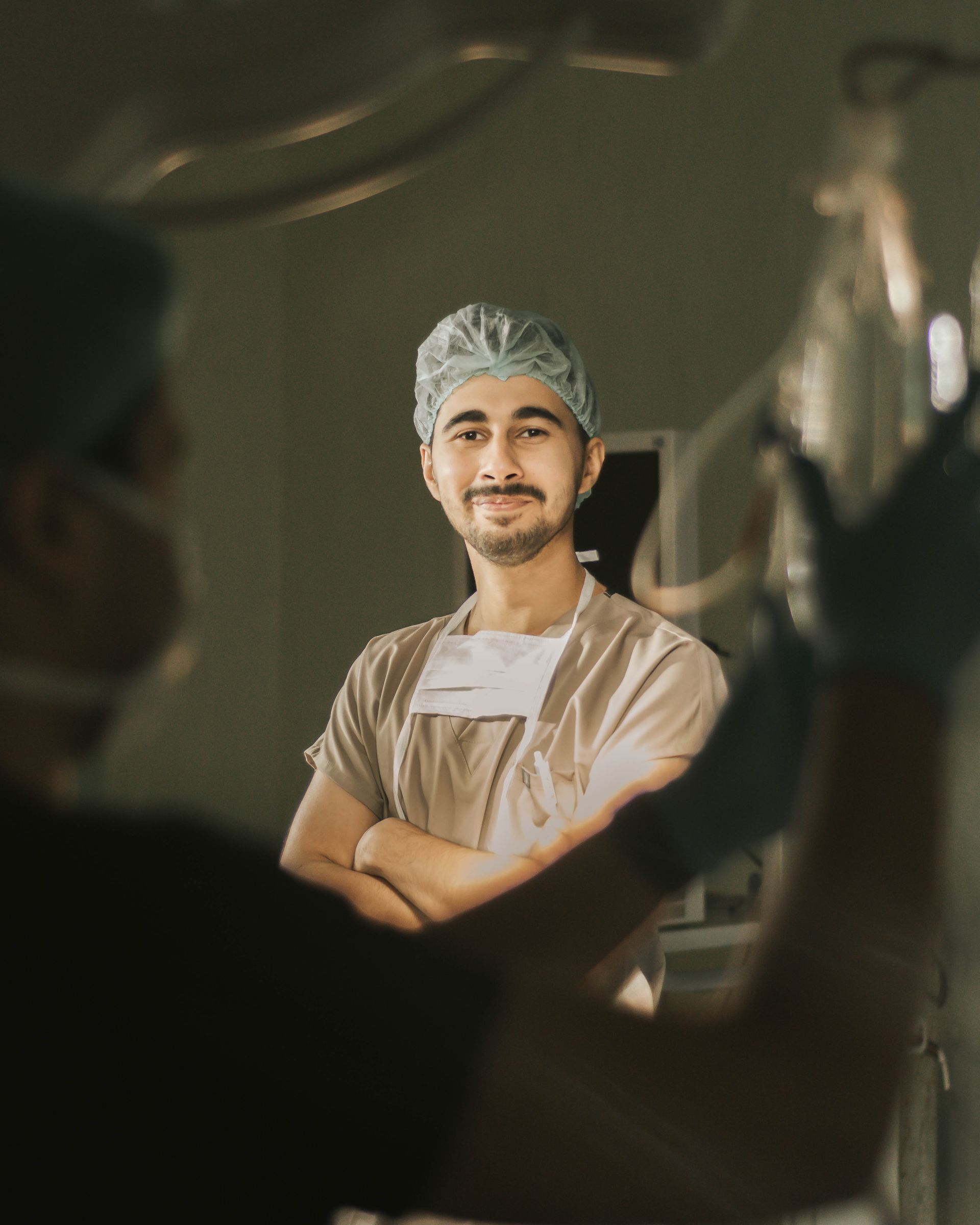
You cannot see it behind my mask, but I am clearly shocked. I look around the unit, the wire dangling from the patient’s neck like a warning, to find the intensive care unit bustling smoothly. Ahmad, the charge nurse, gives me a reassuring grin and raises his eyebrows to say, “Go on”. His 17 years of experience give me confidence, and I continue to work as the sound of sirens eases away.
This ICU, located in Amman, Jordan, functions well under stress, particularly when the stress has to do with war. The US-Israel-Iran War has added tension to the air of an otherwise lighthearted Amman. Normally an observer, it has found itself at the crossroads of violence once again. Fighter jets sweep the sky overhead while distant detonations rumble the edifices supporting Jordanian livelihood: places of worship, small businesses, hospitals, and more. Located in the heart of conflict, this hospital exemplifies the best of healthcare in that its constituents remain dedicated to their patients no matter the stressor.
A portable TV blares behind the nursing station desk as I continue, noting that the shrapnel that landed in Idlib has not caused harm. News outlets’ constant barrage of information tests Jordanians’ ability to remain neutral and focused in the setting of a circumferential conflict. One colleague works late: “I have a kid who’s scared at home”, he says as he prepares for a chest tube, his practised hands vexed by a nearly imperceptible quiver. The ubiquity of information designed to elicit fear becomes a great burden, particularly when the fear supposedly surrounds you. Practising intensive medicine with a constant threat hanging overhead—whether that be the strike of a silent drone or stray shrapnel, however improbable—has created a league of levelheaded (albeit passionate) healthcare providers ready to heal in the surrounding tumult. In this moment, I felt that reliability in Ahmad’s grin.
All practitioners have the ability to work under the high stress of the ICU. Yet, physical stimulants push this capability even further. While this does have a profound effect on providers’ mental and physical health, these practitioners accept their responsibility with a mixture of Middle Eastern flair and solemnity. Their effusive personalities influence their care.
On multiple occasions, I’ve seen Ahmad whisper jokes into patients’ ears, always bringing a smile to their face, as the family discusses serious matters with the medical team. Another nurse started calling me “bro”, imitating the American method of communication, just for a laugh. These smiles promote a healthy and motivating work environment and are truly impressive when considering the surrounding hostility. The sirens accompany nearby bombings and sometimes occur hourly. One colleague, a pulmonary fellow, says that his wife and child are in Gaza struggling to secure food. His patient care is nearly impeccable.
Individual backgrounds add to collective strength. One fellow is dreading that, next year, the hospital will have two fellows for a four-fellow program. At the same time, he carries the weight of his hometown on his shoulders; deep in the West Bank, the population of 500,000 shares 1.5 pulmonary clinic days per week. The resident pulmonologist is set to retire soon, and he’s decided to inherit the duty.
Having constituents with clear missions, many created by unfortunate circumstances, has ingrained strength in this Amman hospital. It begs the question of mentality. Are these individuals truly this driven? That they can march through turmoil unperturbed? That the “peak performance” law does not apply to them regarding stressors? That despite being from all walks of life, they can unify to care for the ill?
Author’s Note: I recently travelled to Amman, Jordan, to practice pulmonary and critical care and learn how they practice medicine. I found the experiences, some of which are highlighted in this short narrative, memorable.