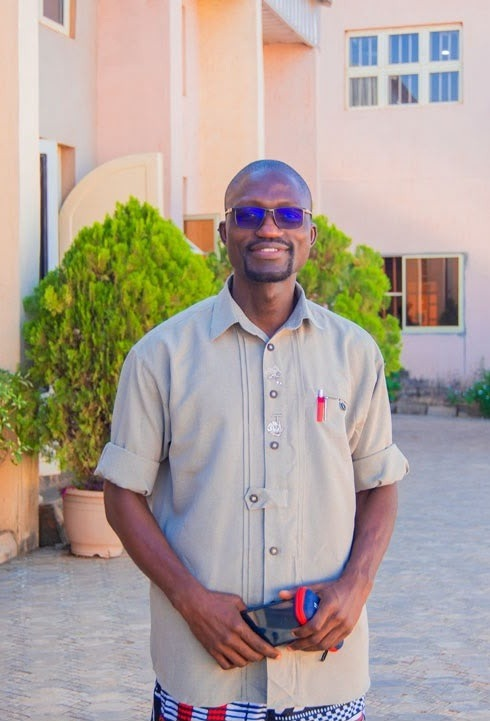

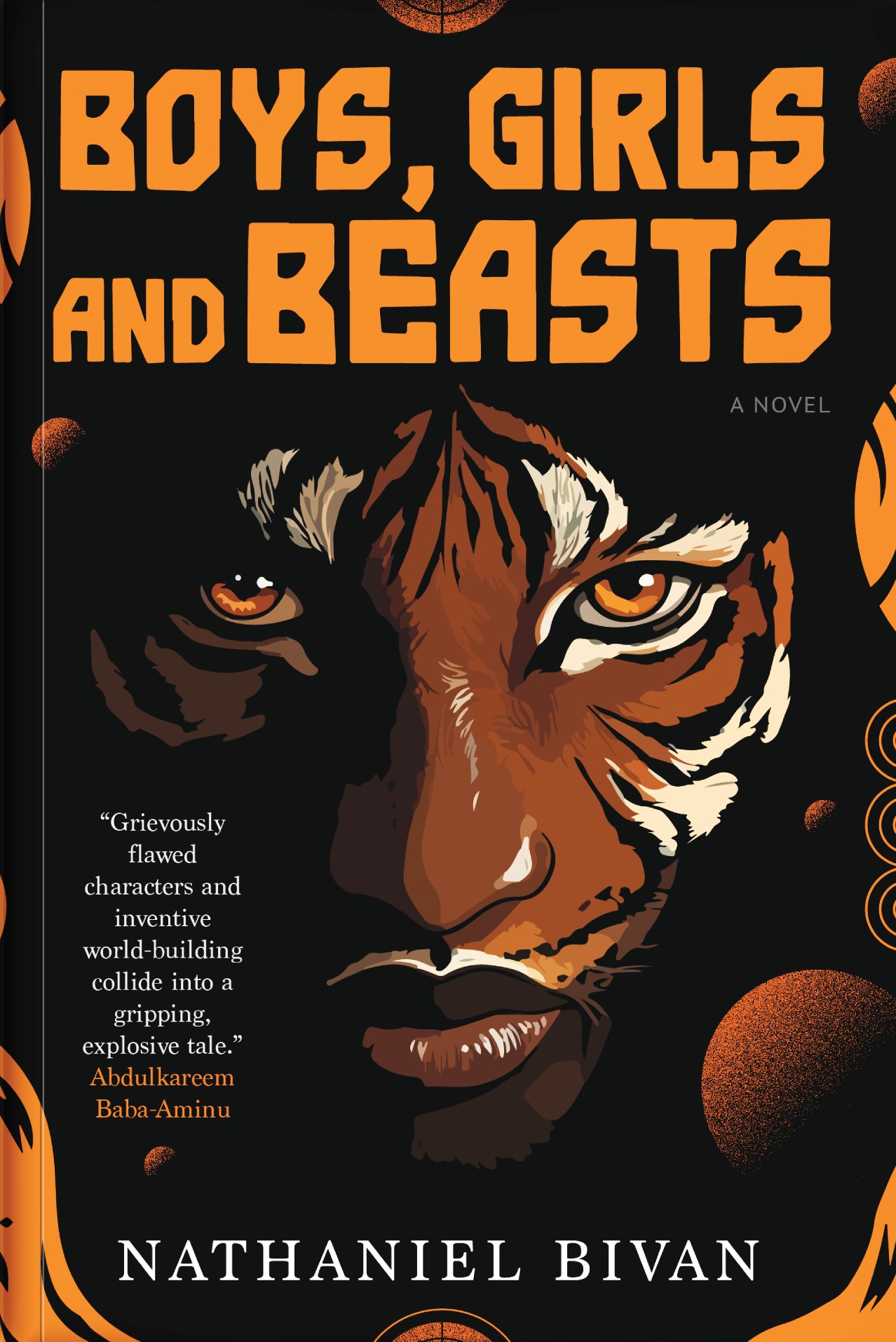
Nathaniel Bivan is an independent conflict and solutions journalist. He previously served as Features Editor at HumAngle Media and Arts Editor at Daily Trust. His work has appeared in international outlets including The Christian Science Monitor, El País, and Religion Unplugged, among others. His debut novel, Boys, Girls and Beasts, was published by Masobe Books in 2024 and was recently acquired by the US-based publishing house Walking Together Press. In this 7 Crossings interview, he reflects on carrying childhood memories of conflict in Zaria, writing without a fixed sanctuary, confronting writerly bias, and crafting characters that serve as tunnels into the human soul.
- The Origin: What is one sound, scent, or image from your earliest home that still finds its way into your work today?
Bivan: It’s the shout of a crowd pelting stones at our home when I was just about eight years old, with a man on horseback leading them. This was during a time of ethno-religious conflict in Zaria, Kaduna State, Nigeria. Its entrance into my work is more psychological than literal, because I am yet to publish anything even remotely related or inspired by this event.
- The Crossing: How has moving, whether across oceans, cities, or internal states of mind, changed the way you create?
Bivan: I have learned to judge people in different societies based on their background. For example, if you have lived in the north almost all your life, I would not judge your behaviour or reaction to life by the standards of someone who has lived elsewhere. Instead, I would try to see things from your own point of view before drawing any conclusions. So this helps in the way I build my characters.
- The Ritual: What does your creative sanctuary look like, and what is the one non-negotiable habit you need before you start working?
Bivan: I don’t have a sanctuary. I write anywhere—at the dining table or my bedroom’s dressing table, anywhere. Sometimes I use my phone to write when I am on transit. On rare occasions, I use a hotel room somewhere far from home or a co-workspace, particularly when I have a block. Leaving my comfort zone for another spot always pushes out my creative juice.
- The Friction: What is the hardest truth you have had to confront about making art in a space where you might feel like an outsider?
Bivan: It’s the fact that I would always have a bias. Every writer has a message to pass across, whether they admit it or not. I have heard some claim to simply want to entertain, but even that in itself is an agenda. Even when my characters take me to places I didn’t plan in my outline, I strongly believe that they can always go as far as I can humanly let them. Our work, in the end, will always be a product of who we are. However, a writer’s ability to win more in burying self is always a plus, and I strive for that. Maybe you can call that objectivity.
- The Lineage: Which ancestor, mentor, or fellow artist, do you feel is standing over your shoulder when your work is at its best?
Bivan: Without a moment’s hesitation, it’s Jerry Jenkins. I have read as much of his work as possible and receive emails from him to this day. Riven is my favourite work of his, and I find myself trying to match its depth
- The Compass: When self-doubt or exhaustion sets in, what anchors you and reminds you why your voice matters?
I always tell myself that my suffering or exhaustion is the price I must pay for the joy of seeing the final product. No pain, no gain. In the end, this is my biggest validation.
- The Legacy: If someone encounters your work a hundred years from now, what do you hope they understand about the world you walked through?
Bivan: I want them to know that the characters they meet are like a tunnel into the souls of people who lived before them. It took the works of writers like William Shakespeare’s for many of us to experience the sixteenth and seventeenth centuries. I want them to see and experience our time and the way we thought, walked and created through the characters I create. In some way, I hope they learn about the past in order for them to understand their present and how to navigate the future. Deep within me, I crave for them to know that I too existed.